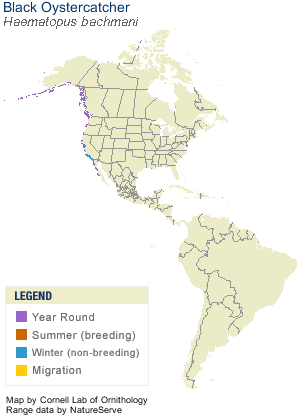
GALLERIES > BIRDS > CHARADRIIFORMES > HAEMATOPODIDAE > BLACK OYSTERCATCHER [Haematopus bachmani] [plot on map]
Location: Clover Pt., Victoria, B.C., CanadaGPS: 48.4N, -123.3W, elev=2' MAP Date: September 3, 2008 ID : 7C2V8431 [3888 x 2592]
|
Location: Playa del Rey (Ballona Creek), CAGPS: 34.0N, -118.4W, elev=0' MAP Date: July 20, 2009 ID : 7C2V0208 [3888 x 2592]
|

|
Location: Playa del Rey (Ballona Creek), CAGPS: 34.0N, -118.4W, elev=0' MAP Date: April 6, 2015 ID : B13K8119 [4896 x 3264]
|
|
|
Location: Playa del Rey (Ballona Creek), CAGPS: 34.0N, -118.4W, elev=0' MAP Date: November 15, 2011 ID : B13K0029 [4896 x 3264]
|
|
|
Location: Playa del Rey (Ballona Creek), CAGPS: 34.0N, -118.4W, elev=0' MAPDate: November 9, 2010 |
|
|
Location: Playa del Rey (Ballona Creek), CAGPS: 34.0N, -118.4W, elev=0' MAP Date: July 20, 2009 ID : 7C2V0205 [3888 x 2592]
|
Location: Playa del Rey (Ballona Creek), CAGPS: 34.0N, -118.4W, elev=0' MAP Date: April 23, 2008 ID : 8898 [3888 x 2592]
|
|
Location: Playa del Rey (Ballona Creek), CAGPS: 34.0N, -118.4W, elev=0' MAP Date: March 16, 2009 ID : 7C2V6024 [3888 x 2592]
|
Location: Playa del Rey (Ballona Creek), CAGPS: 34.0N, -118.4W, elev=0' MAP Date: March 16, 2009 ID : 7C2V6025 [3888 x 2592]
|
|
Location: Playa del Rey (Ballona Creek), CAGPS: 34.0N, -118.4W, elev=0' MAP Date: September 13, 2008 ID : 7C2V8780 [3888 x 2592]
|
Location: Playa del Rey (Ballona Creek), CAGPS: 34.0N, -118.4W, elev=0' MAP Date: April 23, 2008 ID : 8901 [3888 x 2592]
|
|
Location: Playa del Rey (Ballona Creek), CAGPS: 34.0N, -118.4W, elev=0' MAP Date: April 23, 2008 ID : 8903 [3888 x 2592]
|
Location: Playa del Rey (Ballona Creek), CAGPS: 34.0N, -118.4W, elev=0' MAP Date: April 23, 2008 ID : 8905 [3888 x 2592]
|
|
Location: Playa del Rey (Ballona Creek), CAGPS: 34.0N, -118.4W, elev=0' MAP Date: July 22, 2007 ID : ? [3888 x 2592]
|
Location: Playa del Rey (Ballona Creek), CAGPS: 34.0N, -118.4W, elev=0' MAP Date: January 7, 2008 ID : 1903 [3888 x 2592]
|
|
Location: Playa del Rey (Ballona Creek), CAGPS: 34.0N, -118.4W, elev=0' MAP Date: January 7, 2008 ID : 1943 [3888 x 2592]
|
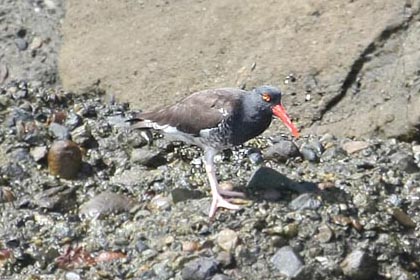
Location: Tijuana (Coronado Islands), MexicoGPS: 32.4N, -117.2W, elev=0' MAP Date: March 15, 2008 ID : 6389 [3888 x 2592]
|
|
SPECIES INFO
The American Black Oystercatcher, Haematopus bachmani, also called Western Black Oystercatcher or simply Black Oystercatcher, is a conspicuous black bird found on the shoreline of western North America. It ranges from the Aleutian Islands of Alaska to the coast of the Baja California peninsula.
The American Black Oystercatcher is the only representative of the oystercatcher family (Haematopodidae) over most of its range, overlapping slightly with the American Oystercatcher (H. palliatus) on the coast of Baja California. Within its range it is most commonly referred to as the Black Oystercatcher, although this name is also used locally for the Blackish Oystercatcher and the African Black Oystercatcher. Its scientific name is derived by John James Audubon from that of his friend John Bachman.
Although the species is not considered threatened, its global population size is estimated between 8,900–11,000 individuals. The Black Oystercatcher is a species of high conservation concern throughout its range (U.S., Canadian, Alaskan, and Northern & Southern Pacific Shorebird Conservation Plans), a keystone indicator species along the north Pacific shoreline, a management indicator species in the Chugach Natioanl Forest, and a U.S. Fish & Wildlife Service focal species for priority conservation action.
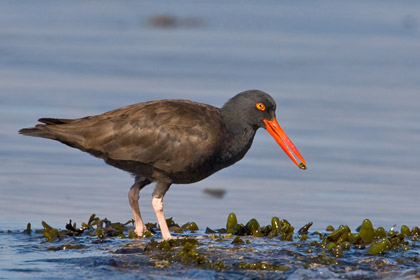
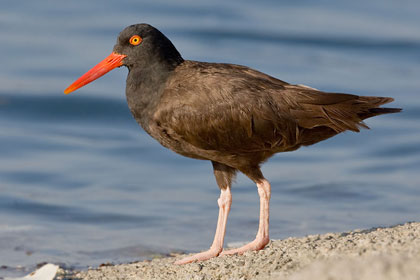
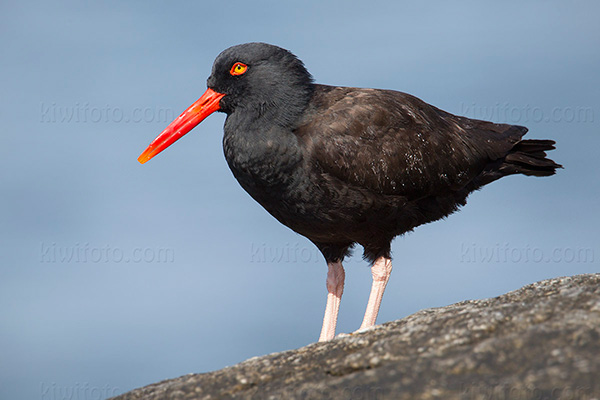
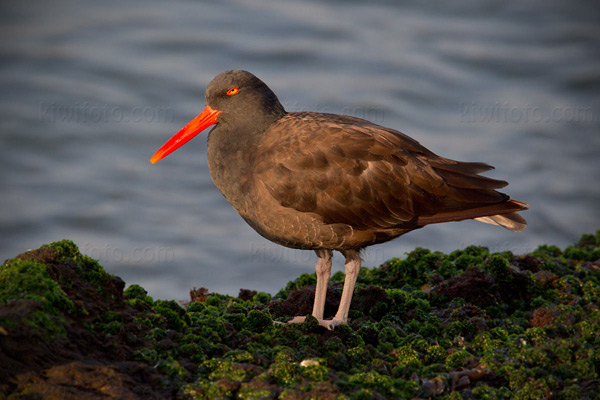
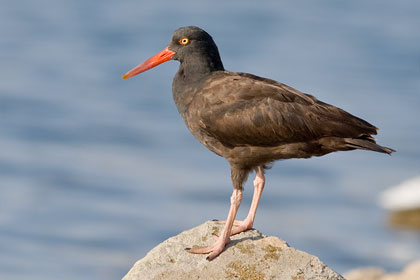
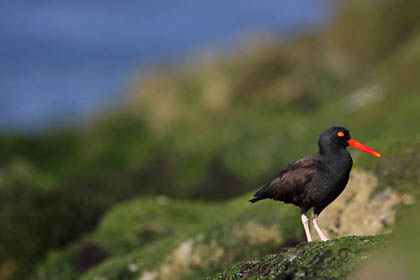
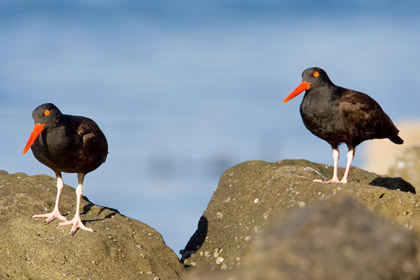
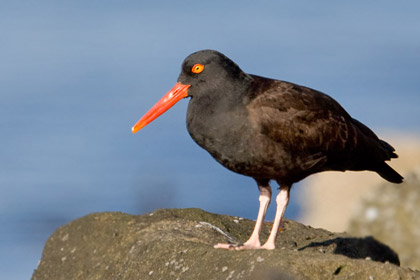
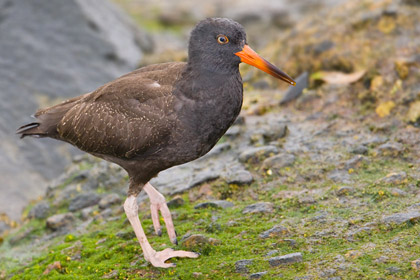
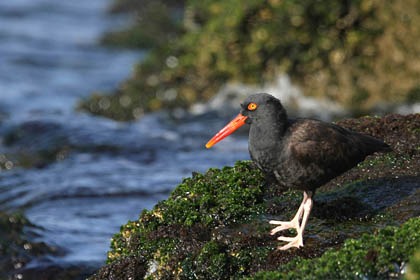
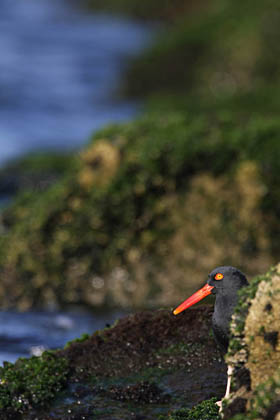
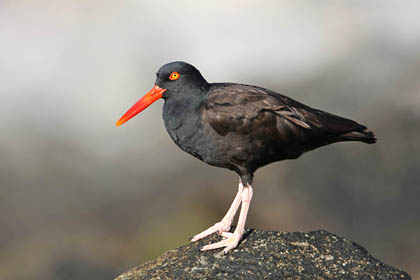
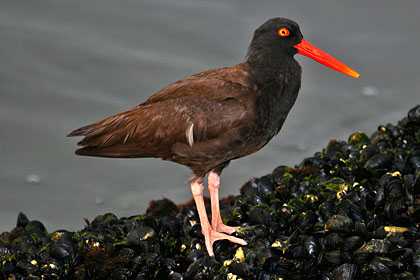
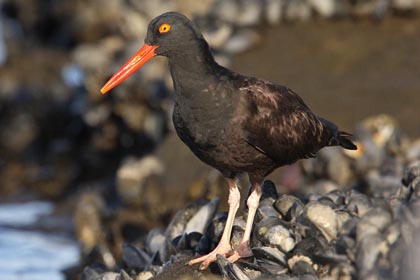
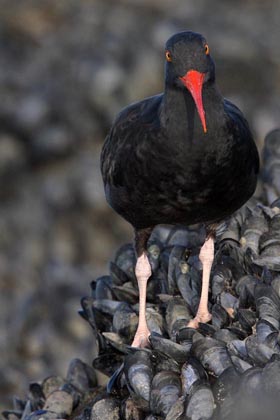
The American Black Oystercatcher is a large entirely black shorebird, with a long (9 cm) bright red bill and pink legs. It has a bright yellow iris and a red eye-ring. Its plumage varies slightly from north to south, being darker further north.
|
|