GALLERIES > BIRDS > CHARADRIIFORMES > LARIDAE > LAVA GULL [Larus fuliginosus] [plot on map]
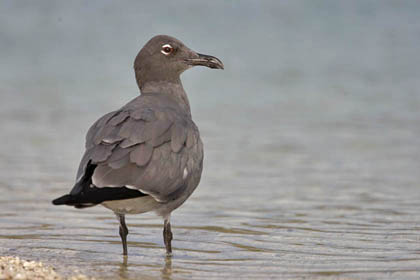
Location: Darwin's Beach, Genovesa Island, Gal?pagosGPS: 0.3N, -89.9W, elev=82' MAP Date: May 21, 2008 ID : 7C2V2806 [3888 x 2592]
|
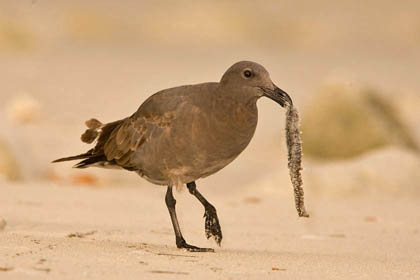
Location: Darwin's Beach, Genovesa Island, Gal?pagosGPS: 0.3N, -89.9W, elev=82' MAP Date: May 21, 2008 ID : 7C2V2915 [3888 x 2592]
|

|
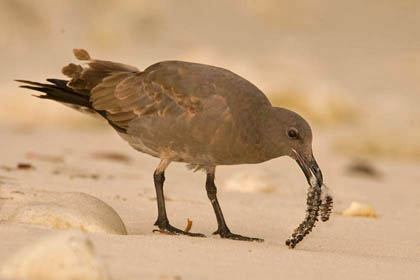
Location: Darwin's Beach, Genovesa Island, Gal?pagosGPS: 0.3N, -89.9W, elev=82' MAP Date: May 21, 2008 ID : 7C2V2883 [3888 x 2592]
|
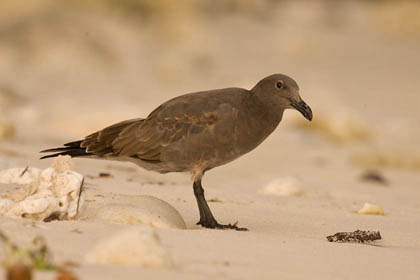
Location: Darwin's Beach, Genovesa Island, Gal?pagosGPS: 0.3N, -89.9W, elev=82' MAP Date: May 21, 2008 ID : 7C2V2884 [3888 x 2592]
|
|
Location: Darwin's Beach, Genovesa Island, Gal?pagosGPS: 0.3N, -89.9W, elev=82' MAP Date: May 21, 2008 ID : 7C2V2965 [3888 x 2592]
|
Location: Darwin's Beach, Genovesa Island, Gal?pagosGPS: 0.3N, -89.9W, elev=82' MAP Date: May 21, 2008 ID : 7C2V2973 [3888 x 2592]
|
|
Location: Darwin's Beach, Genovesa Island, Gal?pagosGPS: 0.3N, -89.9W, elev=82' MAP Date: May 21, 2008 ID : 7C2V2539 [3888 x 2592]
|
Location: Darwin's Beach, Genovesa Island, Gal?pagosGPS: 0.3N, -89.9W, elev=82' MAP Date: May 21, 2008 ID : 7C2V2608 [3888 x 2592]
|
|
Location: Darwin's Beach, Genovesa Island, Gal?pagosGPS: 0.3N, -89.9W, elev=82' MAP Date: May 21, 2008 ID : 7C2V2723 [3888 x 2592]
|
Location: Darwin's Beach, Genovesa Island, Gal?pagosGPS: 0.3N, -89.9W, elev=82' MAP Date: May 21, 2008 ID : 7C2V2752 [3888 x 2592]
|
|
Location: North Seymour Island, Gal?pagosGPS: -0.4S, -90.3W, elev=84' MAP Date: May 23, 2008 ID : 7C2V3911 [3888 x 2592]
|
|
SPECIES INFO
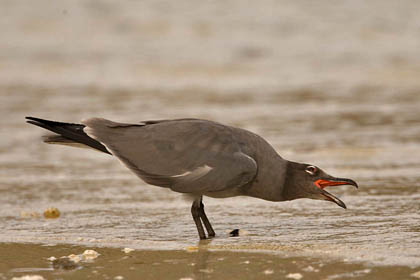
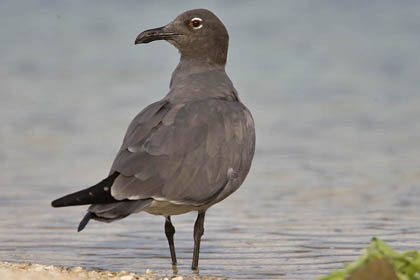
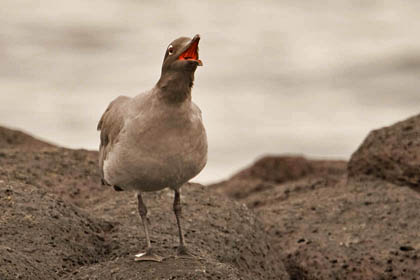
The Lava Gull (Larus fuliginosus) is a large gull and very closely related to the Laughing Gull. It is the world's rarest gull with the entire population living on the Galapagos Islands. There is only an estimated 300 pairs there.
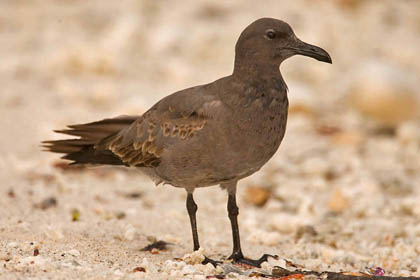
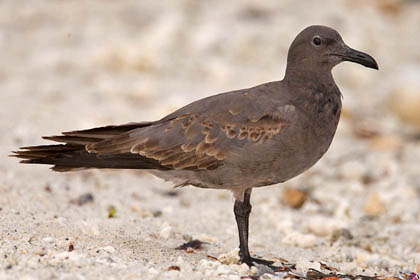
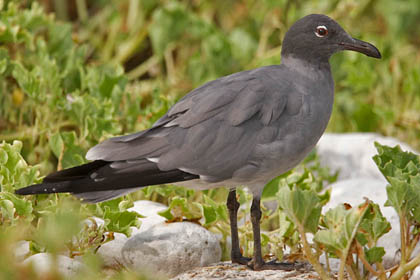
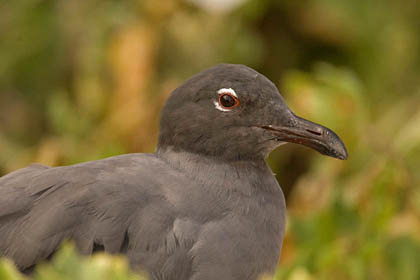
Adult plumage, acquired in the third year of life, consists of a black head, black wings, and with a dark gray body and a paler gray belly. The bill and legs are black, and the inside of the mouth is scarlet. They have white upper and lower eyebrows, with red lids. Immature gulls are generally dark brown.
Lava Gulls are solitary nesters, laying two olive-colored and well-camouflaged eggs that take 30 days to incubate. Young birds fledge at 60 days and are cared for by adults for a short period.
They are omnivores like most Larus gulls, generally scavenging or stealing from nests, but will also catch fish, small crustaceans, and newly-hatched lizards.
The Lava Gull is categorized as "vulnerable" by the IUCN Red List because it exists in small numbers and though the population is stable, it faces numerous threats.
|
|