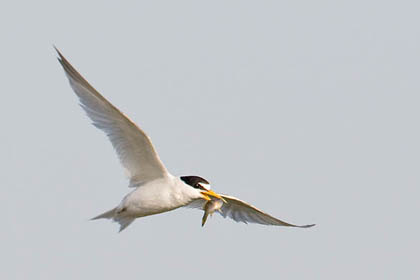
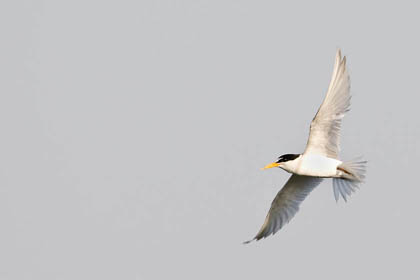
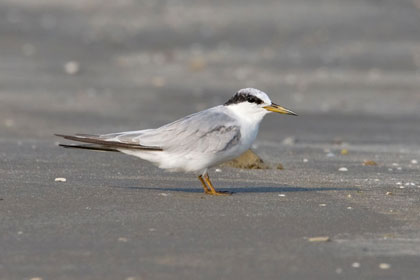
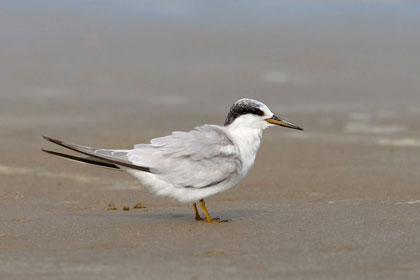
GALLERIES > BIRDS > CHARADRIIFORMES > LARIDAE > LEAST TERN [Sternula antillarum] [plot on map]
Location: Ballona Freshwater Marsh, CAGPS: 34.0N, -118.4W, elev=5' MAP Date: July 26, 2008 ID : 7C2V6253 [3888 x 2592]
|
Location: Ballona Freshwater Marsh, CAGPS: 34.0N, -118.4W, elev=5' MAP Date: July 26, 2008 ID : 7C2V6251 [3888 x 2592]
|

|
Location: Bryan Beach, TXGPS: 28.9N, -95.4W, elev=0' MAP Date: August 30, 2009 ID : 7C2V3519 [3888 x 2592]
|
Location: Bolivar Flats, TXGPS: 29.4N, -94.7W, elev=1' MAP Date: August 28, 2009 ID : 7C2V2344 [3888 x 2592]
|
|
Location: Huntington Beach (Bolsa Chica Lagoon), CAGPS: 33.7N, -118.1W, elev=27' MAP Date: August 8, 2009 ID : 7C2V1310 [3888 x 2592]
|
Location: Huntington Beach (Bolsa Chica Lagoon), CAGPS: 33.7N, -118.1W, elev=27' MAP Date: August 8, 2009 ID : 7C2V1330 [3888 x 2592]
|
|
Location: Huntington Beach (Bolsa Chica Lagoon), CAGPS: 33.7N, -118.1W, elev=27' MAP Date: August 8, 2009 ID : 7C2V1328 [3888 x 2592]
|
Location: Ballona Freshwater Marsh, CAGPS: 34.0N, -118.4W, elev=5' MAP Date: July 26, 2008 ID : 7C2V6172 [3888 x 2592]
|
|
Location: Ballona Freshwater Marsh, CAGPS: 34.0N, -118.4W, elev=5' MAP Date: July 26, 2008 ID : 7C2V6186 [3888 x 2592]
|
Location: Ballona Freshwater Marsh, CAGPS: 34.0N, -118.4W, elev=5' MAP Date: July 26, 2008 ID : 7C2V6195 [3888 x 2592]
|
|
Location: Ballona Freshwater Marsh, CAGPS: 34.0N, -118.4W, elev=5' MAP Date: July 26, 2008 ID : 7C2V6203 [3888 x 2592]
|
Location: Ballona Freshwater Marsh, CAGPS: 34.0N, -118.4W, elev=5' MAP Date: July 26, 2008 ID : 7C2V6220 [3888 x 2592]
|
|
Location: Ballona Freshwater Marsh, CAGPS: 34.0N, -118.4W, elev=5' MAP Date: July 26, 2008 ID : 7C2V6236 [3888 x 2592]
|
Location: Ballona Freshwater Marsh, CAGPS: 34.0N, -118.4W, elev=5' MAP Date: July 26, 2008 ID : 7C2V6238 [3888 x 2592]
|
|
Location: Ballona Freshwater Marsh, CAGPS: 34.0N, -118.4W, elev=5' MAP Date: July 26, 2008 ID : 7C2V6263 [3888 x 2592]
|
Location: Ballona Freshwater Marsh, CAGPS: 34.0N, -118.4W, elev=5' MAP Date: July 26, 2008 ID : 7C2V6291 [3888 x 2592]
|
|
Location: Huntington State Beach, CAGPS: 33.6N, -118.0W, elev=1' MAP Date: June 1, 2008 ID : 7C2V4439 [3888 x 2592]
|
Location: Huntington State Beach, CAGPS: 33.6N, -118.0W, elev=1' MAP Date: June 1, 2008 ID : 7C2V4462 [3888 x 2592]
|
|
Location: Huntington State Beach, CAGPS: 33.6N, -118.0W, elev=1' MAP Date: June 1, 2008 ID : 7C2V4357 [3888 x 2592]
|
Location: Huntington State Beach, CAGPS: 33.6N, -118.0W, elev=1' MAP Date: June 1, 2008 ID : 7C2V4384 [3888 x 2592]
|
|
Location: Huntington State Beach, CAGPS: 33.6N, -118.0W, elev=1' MAP Date: June 1, 2008 ID : 7C2V4475 [3888 x 2592]
|
Location: Huntington State Beach, CAGPS: 33.6N, -118.0W, elev=1' MAP Date: June 1, 2008 ID : 7C2V4483 [3888 x 2592]
|
|
Location: Huntington State Beach, CAGPS: 33.6N, -118.0W, elev=1' MAP Date: June 1, 2008 ID : 7C2V4397 [3888 x 2592]
|
Location: Huntington State Beach, CAGPS: 33.6N, -118.0W, elev=1' MAP Date: June 1, 2008 ID : 7C2V4433 [3888 x 2592]
|
|
SPECIES INFO
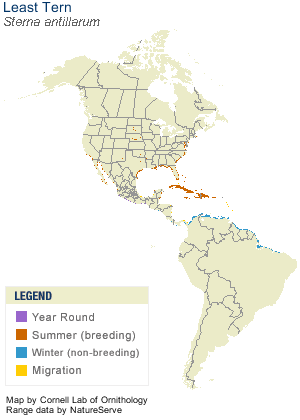
The Least Tern (Sternula antillarum, formerly Sterna antillarum) is a species of tern that breeds in North America and locally in northern South America. It is closely related to, and was formerly often considered conspecific with, the Little Tern S. albifrons of the Old World. Other close relatives include the Yellow-billed Tern S. superciliaris and Peruvian Tern S. lorata, both from South America.
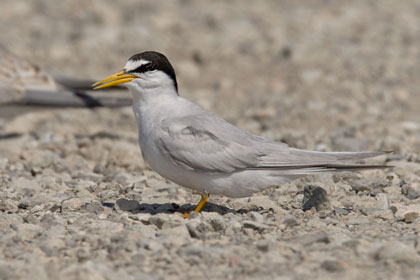
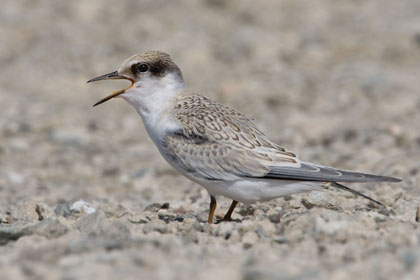
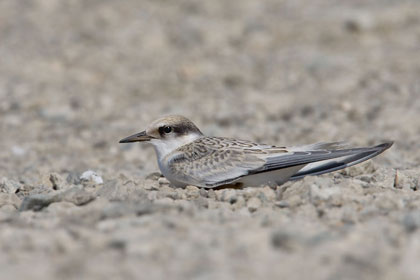
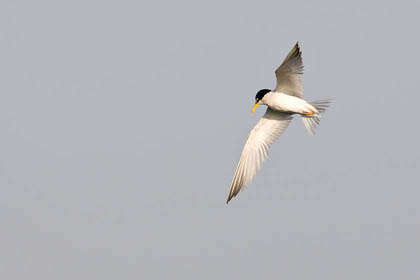
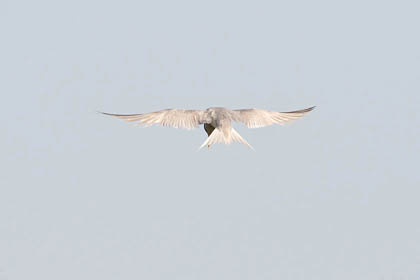
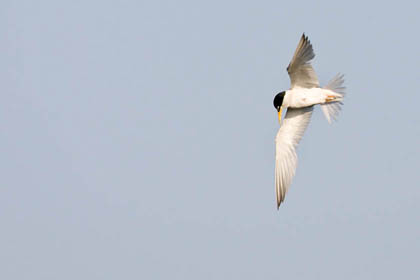
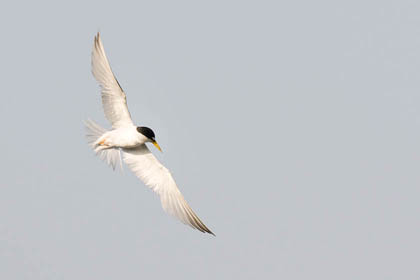
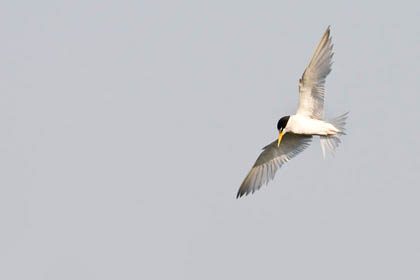
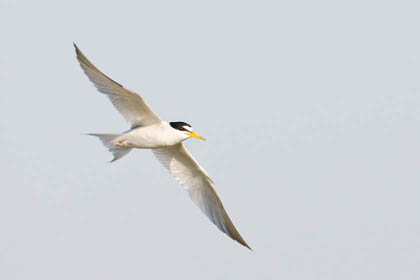
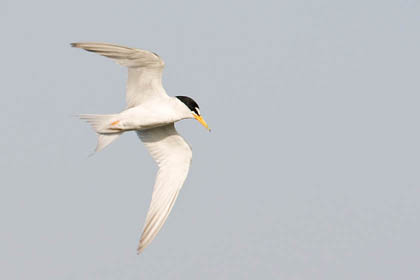
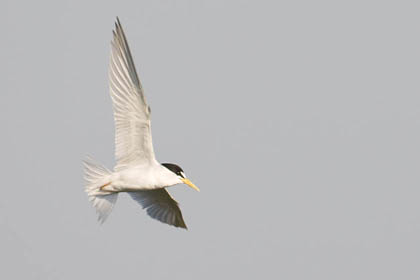
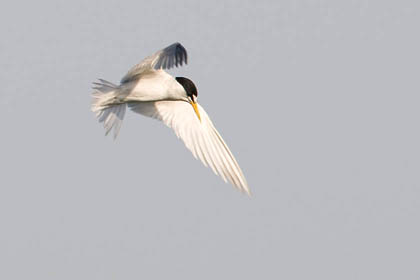
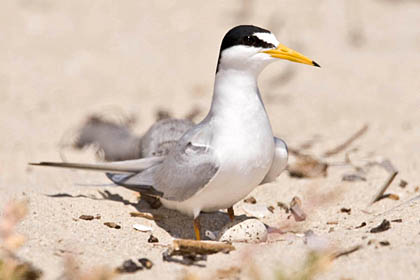
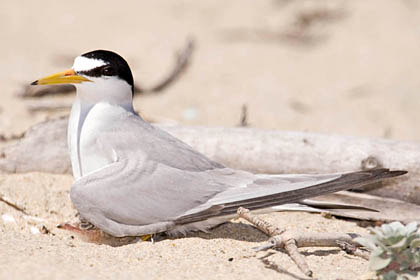
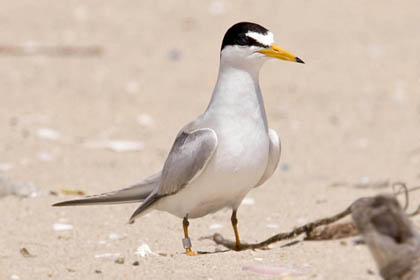
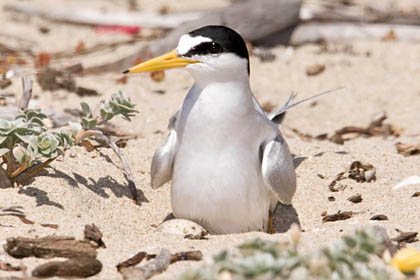
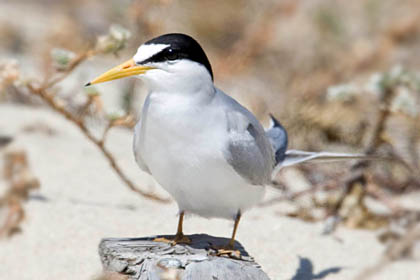
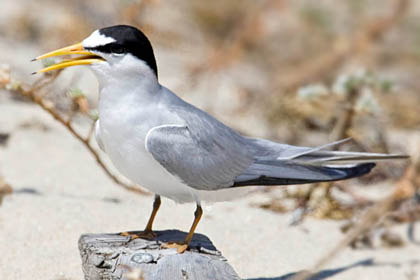
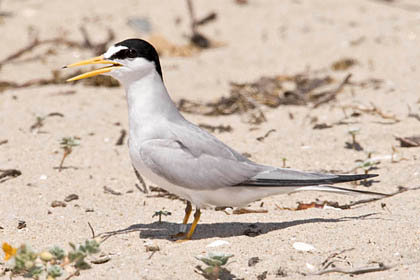
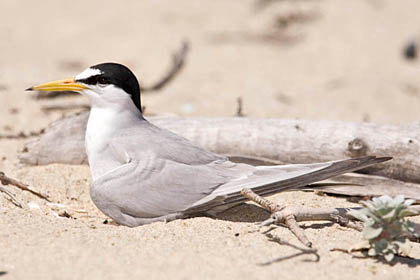
It is a small tern, 22-24 cm long, with a wingspan of 50 cm, and weighing 39-52 g. The upper parts are a fairly uniform pale gray, and the underparts white. The head is white, with a black cap and line through the eye to the base of the bill, and a small white forehead patch above the bill; in winter, the white forehead is more extensive, with a smaller and less sharply defined black cap. The bill is yellow with a small black tip in summer, all blackish in winter. The legs are yellowish. The wings are mostly pale gray, but with conspicuous black markings on their outermost primaries. In behavior, it flies over water with fast, jerky wingbeats and a distinctive hunchback appearance, with the bill pointing slightly downward.
It is migratory, wintering in Central America, the Caribbean and northern South America. It has occurred as a vagrant to Europe, with one record in Great Britain.
It differs from Little Tern mainly in that its rump and tail are gray, not white, and it has a different, more squeaking call; from Yellow-billed Tern in being paler gray above and the bill having a short (not no) black tip; and from Peruvian Tern in being paler gray above and white (not pale gray) below and a shorter black tip to the bill.
|
|