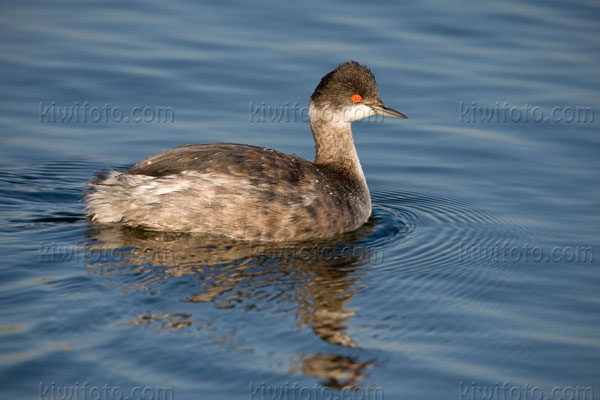
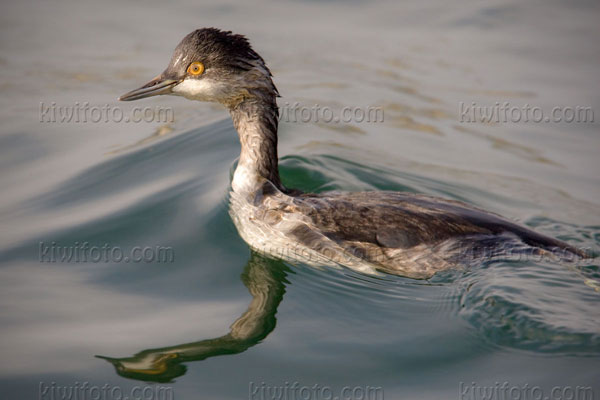
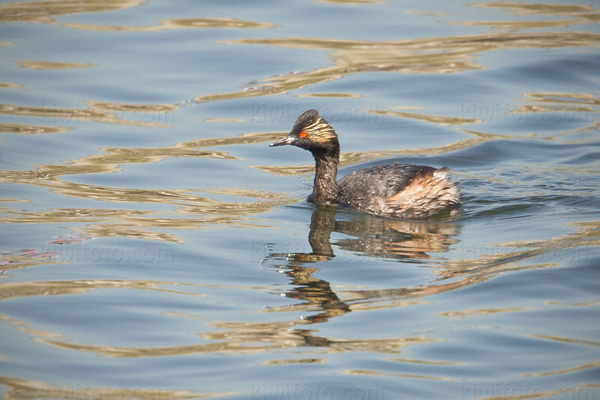
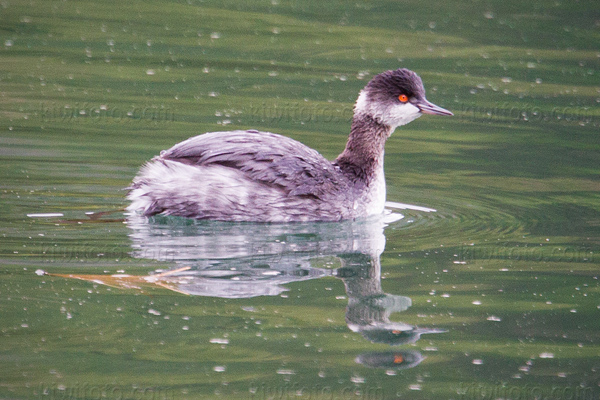
GALLERIES > BIRDS > PODICIPEDIFORMES > PODICIPEDIDAE > EARED GREBE [Podiceps nigricollis] [plot on map]
Location: Playa del Rey (Ballona Creek), CAGPS: 34.0N, -118.4W, elev=0' MAP Date: April 19, 2015 ID : B13K8296 [4896 x 3264]
|
|

|
Location: Playa del Rey (Ballona Creek), CAGPS: 34.0N, -118.4W, elev=0' MAP Date: April 2, 2016 ID : B13K1296 [4896 x 3264]
|
|
|
Location: Los Angeles, CAGPS: 34.1N, -118.2W, elev=281' MAP Date: March 4, 2017 ID : B13K2544 [4896 x 3264]
|
|
|
Location: Los Angeles River (Willow St), CAGPS: 33.8N, -118.2W, elev=7' MAP Date: November 14, 2016 ID : B13K2267 [4896 x 3264]
|
|
|
Location: Huntington Beach (Bolsa Chica Lagoon), CAGPS: 33.7N, -118.1W, elev=27' MAP Date: October 31, 2010 ID : 7C2V3599 [3888 x 2592]
|
|
|
Location: Playa del Rey (Ballona Creek), CAGPS: 34.0N, -118.4W, elev=0' MAP Date: October 12, 2010 ID : 7C2V3340 [3888 x 2592]
|
|
|
Location: Playa del Rey (Ballona Creek), CAGPS: 34.0N, -118.4W, elev=0' MAP Date: April 28, 2012 ID : B13K4659 [4896 x 3264]
|
|
|
Location: Elwood Canyon, Santa Barbara, CAGPS: 34.5N, -119.9W, elev=224' MAP Date: January 2, 2016 ID : B13K9940 [4896 x 3264]
|
|
|
Location: Estero San Jose, San Jose del Cabo, MexicoGPS: 23.1N, -109.7W, elev=26' MAP Date: February 1, 2013 ID : B13K2054 [4896 x 3264]
|
|
|
Location: Playa del Rey (Ballona Creek), CAGPS: 34.0N, -118.4W, elev=0' MAP Date: April 12, 2008 ID : 8483 [3888 x 2592]
|
Location: Goose Island State Park, TXGPS: 28.1N, -96.9W, elev=-1' MAP Date: February 1, 2009 ID : 7C2V4217 [3888 x 2592]
|
|
Location: Playa del Rey (Ballona Creek), CAGPS: 34.0N, -118.4W, elev=0' MAP Date: April 28, 2008 ID : 9407 [3888 x 2592]
|
Location: Salton Sea, CAGPS: 33.2N, -115.6W, elev=-232' MAP Date: December 23, 2007 ID : 9774 [3888 x 2592]
|
|
Location: Huntington Beach (Bolsa Chica Lagoon), CAGPS: 33.7N, -118.1W, elev=27' MAP Date: February 8, 2009 ID : 7C2V4513 [3888 x 2592]
|
Location: Huntington Beach (Bolsa Chica Lagoon), CAGPS: 33.7N, -118.1W, elev=27' MAP Date: February 28, 2009 ID : 7C2V5051 [3888 x 2592]
|
|
SPECIES INFO
The Black-necked Grebe, Podiceps nigricollis, is a member of the grebe family of waterbirds. It occurs on every continent except Australia and Antarctica.
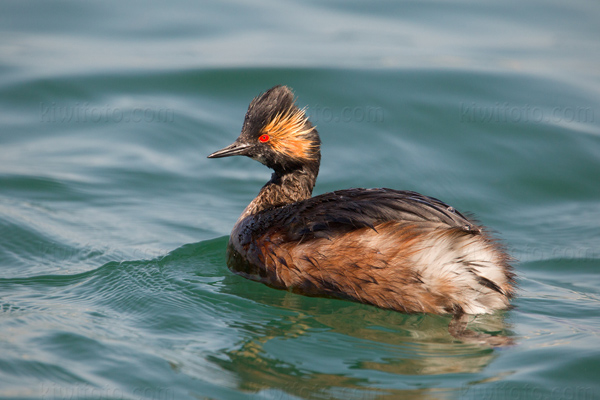
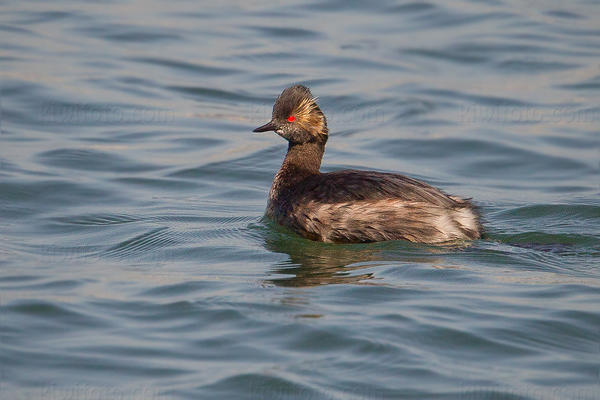
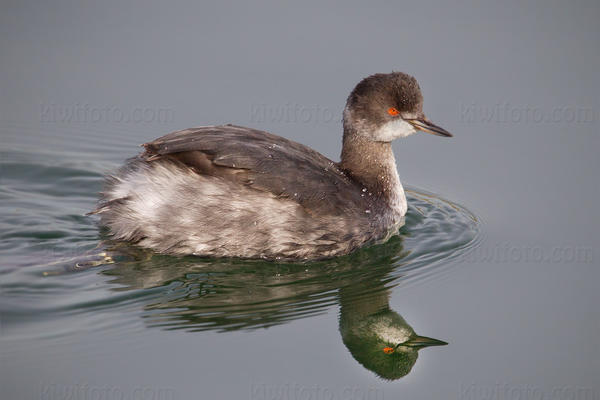
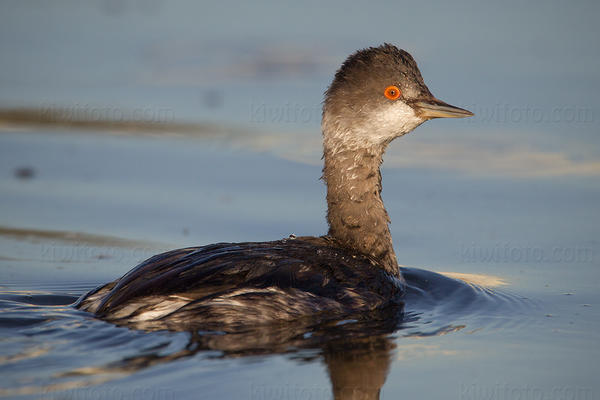
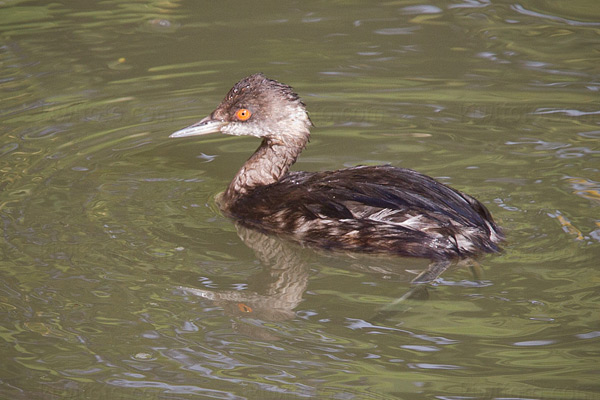
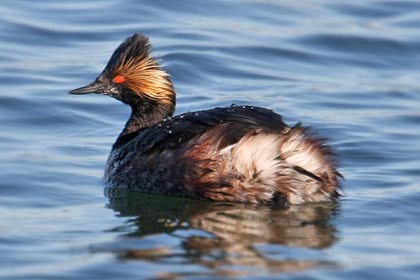
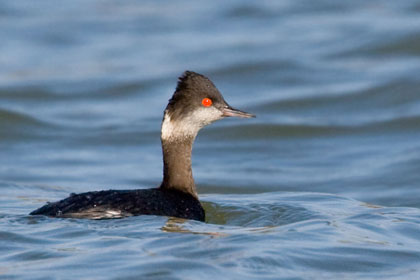
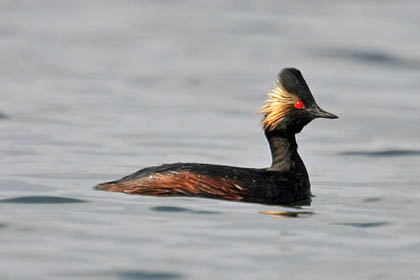
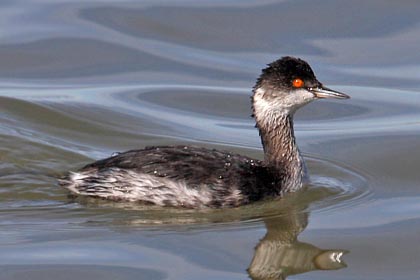
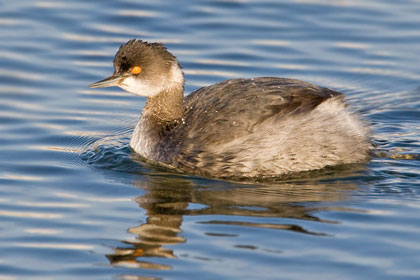
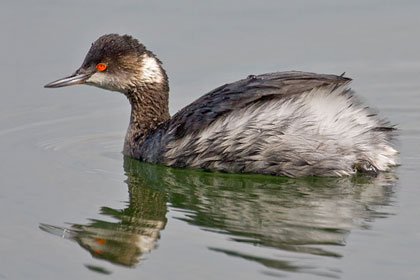
The Black-necked Grebe is 28–34 cm (12"-14") long. The adult is unmistakable in summer with a black head and neck and yellow ear tufts. In winter, this small grebe is white with a poorly defined black cap, which distinguishes it from the crisper-looking Slavonian Grebe (Horned Grebe in America).
In courtship the male gives a mellow poo-ee-chk call to the female.
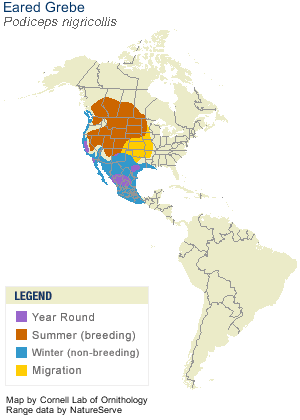
This species breeds in vegetated areas of freshwater lakes across Europe, Asia, Africa, northern South America and the southwest and western United States. The North American subspecies, P. n. californicus is known as the Eared Grebe (or "eared diver"). These birds migrate in winter, mostly to the Pacific Coast where they range south to El Salvador on a regular basis; vagrants may occur as far as Costa Rica.
Black-necked Grebes of the nominate subspecies P. n. nigricollis in the cooler temperate regions of the Old World also winter further south, with many European birds moving to the Mediterranean area. The isolated southern African race, P. n. gurneyi is sedentary. It was named by South African ornithologist and author Austin Roberts in honour of the English bankers and amateur ornithologists John Henry Gurney and John Henry Gurney Jr..
|
|