GALLERIES > BIRDS > ANSERIFORMES > ANATIDAE > LONG-TAILED DUCK [Clangula hyemalis] [plot on map]
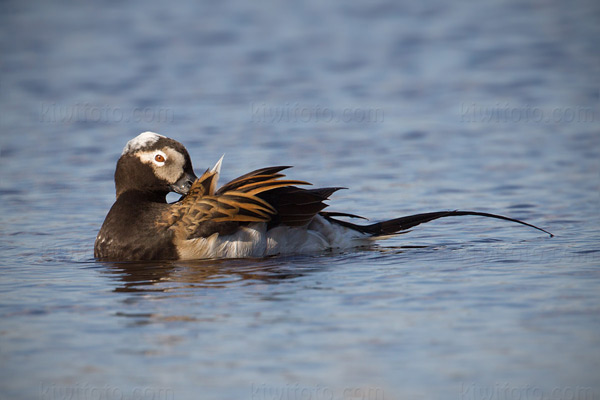
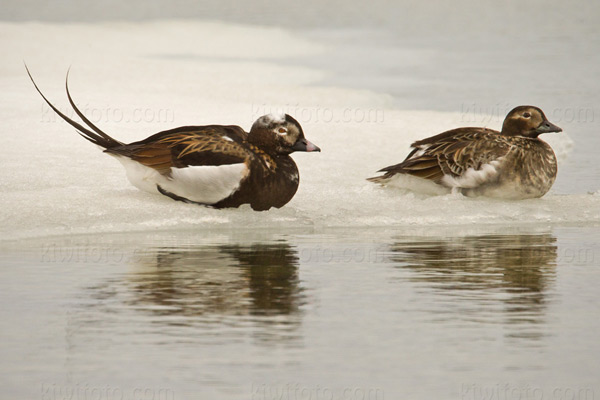
Location: Kougarok Road, Nome, AKGPS: 65.3N, -164.8W, elev=949' MAP Date: June 5, 2012 ID : B13K0122 [4896 x 3264]
|
|

|
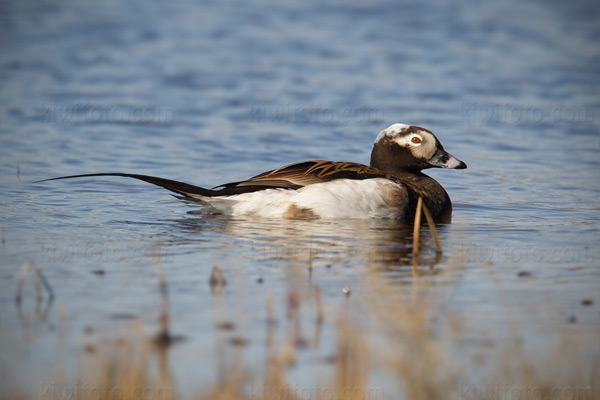
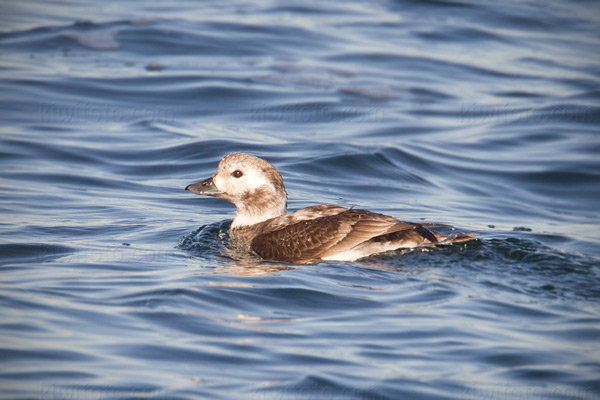
Location: Kougarok Road, Nome, AKGPS: 65.3N, -164.8W, elev=949' MAP Date: June 5, 2012 ID : B13K0132 [4896 x 3264]
|
|
|
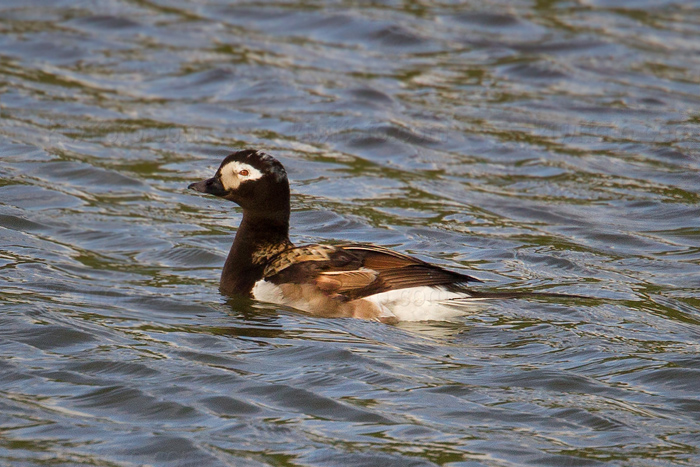
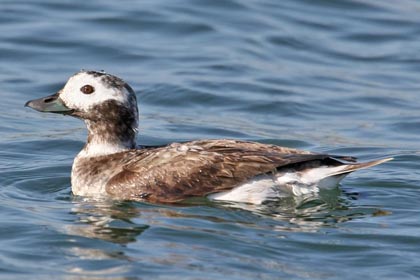
Location: Lake Myvatn, IcelandGPS: 65.6N, -17.0W, elev=918' MAP Date: June 17, 2018 ID : B13K7315 [4896 x 3264]
|
|
|
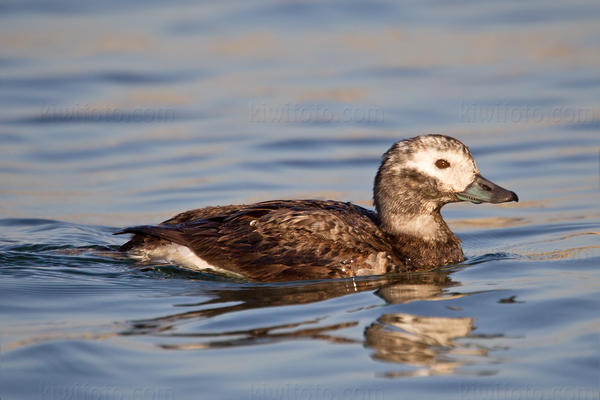
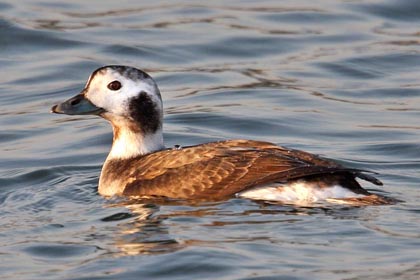
Location: Playa del Rey (Ballona Creek), CAGPS: 34.0N, -118.4W, elev=0' MAP Date: April 2, 2016 ID : B13K1172 [4896 x 3264]
|
|
|
Location: Saint Paul, Pribilof Islands, AKGPS: 57.1N, -170.3W, elev=28' MAP Date: June 1, 2012 ID : B13K8950 [4896 x 3264]
|
|
|
Location: Playa del Rey (Ballona Creek), CAGPS: 34.0N, -118.4W, elev=0' MAP Date: January 28, 2012 ID : B13K3701 [4896 x 3264]
|
|
|
Location: Playa del Rey (Ballona Creek), CAGPS: 34.0N, -118.4W, elev=0' MAP Date: March 28, 2008 ID : 6802 [3888 x 2592]
|
Location: Playa del Rey (Ballona Creek), CAGPS: 34.0N, -118.4W, elev=0' MAP Date: January 9, 2008 ID : 1985 [3888 x 2592]
|
|
Location: Playa del Rey (Ballona Creek), CAGPS: 34.0N, -118.4W, elev=0' MAP Date: December 30, 2007 ID : 1586 [3888 x 2592]
|
|
SPECIES INFO
The Long-tailed Duck (Clangula hyemalis) is a medium-sized sea duck. It is the only living member of its genus, Clangula. An undescribed congener is known from the Middle Miocene Sajóvölgyi Formation (Late Badenian, 13-12 mya) of Mátraszõlõs, Hungary (Gál et al. 1998-99).
It used to be known in North America as Oldsquaw, but biologists feared that this would be offensive to some Native American tribes involved in the conservation effort. The American Ornithologists' Union (2000) stated that "political correctness" was not sufficient to change the name, but "to conform with English usage in other parts of the world", it officially adopted the name Long-tailed Duck.
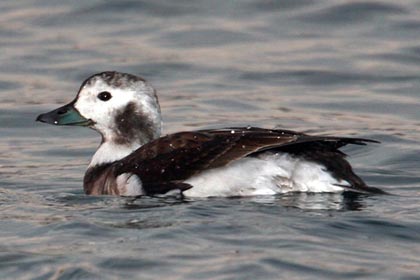
Adults have white underparts. The male has a long pointed tail and a dark bill lighter near the tip. In winter, the male has a dark cheek patch on a mainly white head and neck, a dark breast and mostly white body. In summer, the male is dark on the head, neck and back with a white cheek patch. The female has a brown back and a relatively short pointed tail. In winter, the female's head and neck are white with a dark crown. In summer, the head is dark.
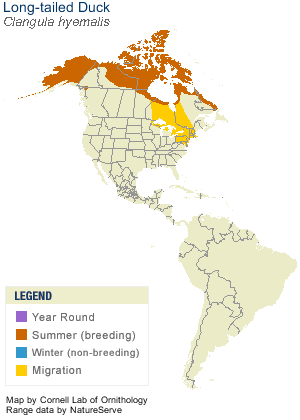
Their breeding habitat is cold northern oceans and large lakes in the North Atlantic region, Alaska, northern Canada, northern Europe and Russia. The nest is located on the ground near water; it is built using vegetation and lined with down.
They are migratory and winter along the eastern and western coasts of North America, on the Great Lakes, coastal Europe and Asia. This is a gregarious duck, and will form large flocks at that time of year. The most important wintering area is the Baltic Sea, where a total of about 4.5 million gather.
They feed by diving, swimming underwater. They mainly eat mollusks, crustaceans and some small fish. Although they usually feed close to the surface, they are capable of diving to depths of 60m (200 feet).
The males are vocal and have a musical yodelling call Ow, ow, owal-ow.
The Long-tailed Duck is one of the species to which the Agreement on the Conservation of African-Eurasian Migratory Waterbirds (AEWA) applies.
|
|