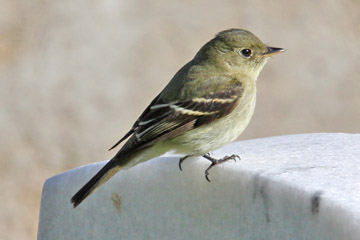
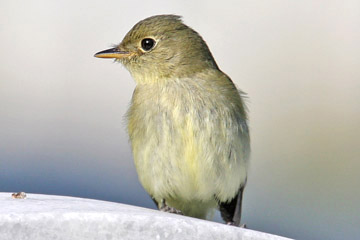
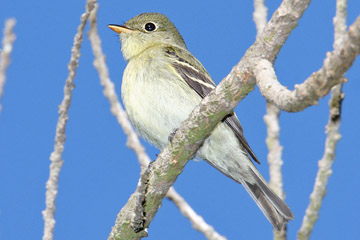
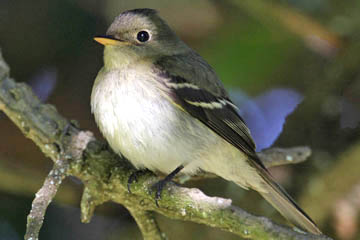
GALLERIES > BIRDS > PASSERIFORMES > TYRANNIDAE > YELLOW-BELLIED FLYCATCHER [Empidonax flaviventris]
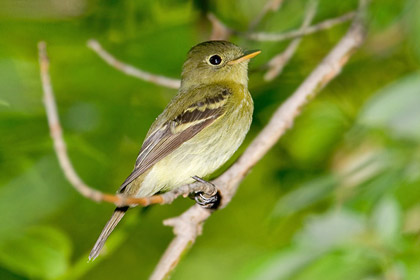
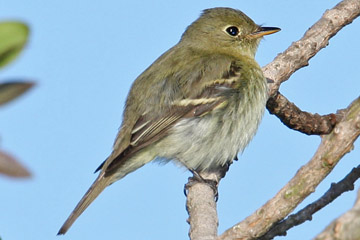
Location: Magee Marsh (Crane Creek), OHGPS: 41.6N, -83.2W, elev=573' MAP Date: May 23, 2009 ID : 7C2V7404 [3888 x 2592]
|
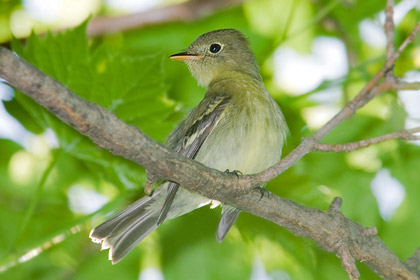
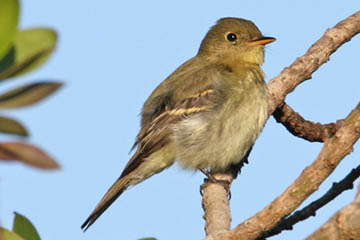
Location: Magee Marsh (Crane Creek), OHGPS: 41.6N, -83.2W, elev=573' MAP Date: May 23, 2009 ID : 7C2V7406 [3888 x 2592]
|

|
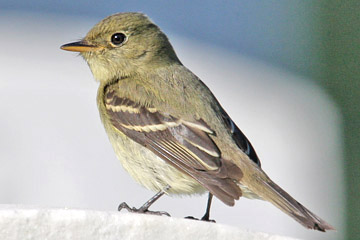
Location: San Diego (Ft. Rosecrans Natl Cemetery), CA
Date: October 06, 2007
ID : 4554 [3888 x 2592]
|
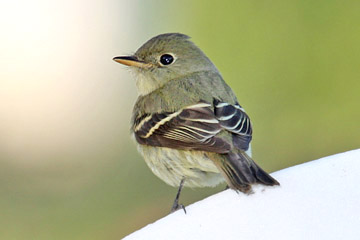
Location: San Diego (Ft. Rosecrans Natl Cemetery), CA
Date: October 06, 2007
ID : 4759 [3888 x 2592]
|
|
Location: San Diego (Ft. Rosecrans Natl Cemetery), CA
Date: October 06, 2007
ID : 4514 [3888 x 2592]
|
Location: San Diego (Ft. Rosecrans Natl Cemetery), CA
Date: October 06, 2007
ID : 4585 [3888 x 2592]
|
|
Location: San Diego (Ft. Rosecrans Natl Cemetery), CA
Date: October 06, 2007
ID : 4708 [3888 x 2592]
|
Location: San Diego (Ft. Rosecrans Natl Cemetery), CA
Date: October 06, 2007
ID : 4700 [3888 x 2592]
|
|
Location: San Diego (Ft. Rosecrans Natl Cemetery), CA
Date: October 06, 2007
ID : 4770 [3888 x 2592]
|
Location: San Diego (Ft. Rosecrans Natl Cemetery), CA
Date: October 06, 2007
ID : 4787 [3888 x 2592]
|
|
SPECIES INFO
The Yellow-bellied Flycatcher, Empidonax flaviventris, is a small insect-eating bird of the tyrant flycatcher family.
Adults have brownish-olive upperparts, darker on the wings and tail, with yellowish underparts; they have a white eye ring, white wing bars, a small bill and a short tail. The upper part of the bill is dark; the lower part is orange-pink.
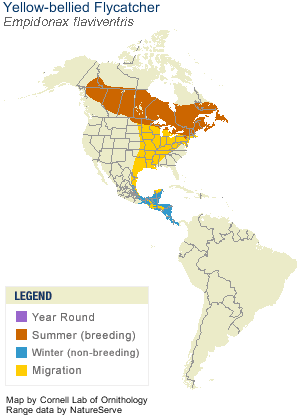
Their breeding habitat is wet northern woods, especially spruce bogs, across Canada and the northeastern United States. They make a cup nest in sphagnum moss on or near the ground.
These birds migrate to southern Mexico and Central America.
Yellow-bellied flycatchers wait on a perch low or in the middle of a tree and fly out to catch insects in flight, sometimes hovering over foliage. They sometimes eat berries or seeds.
The yellow-bellied flycatcher's song is a dry "CHE-bek". The call is transcribed as chu-wee, ascending in pitch.
|
|